
Roof Care
Tile Roof Repair vs. Replacement in Boca Raton
Repair or replace your Boca Raton tile roof? Learn the signs, lifespan facts, and cost drivers that matter in coastal wind.
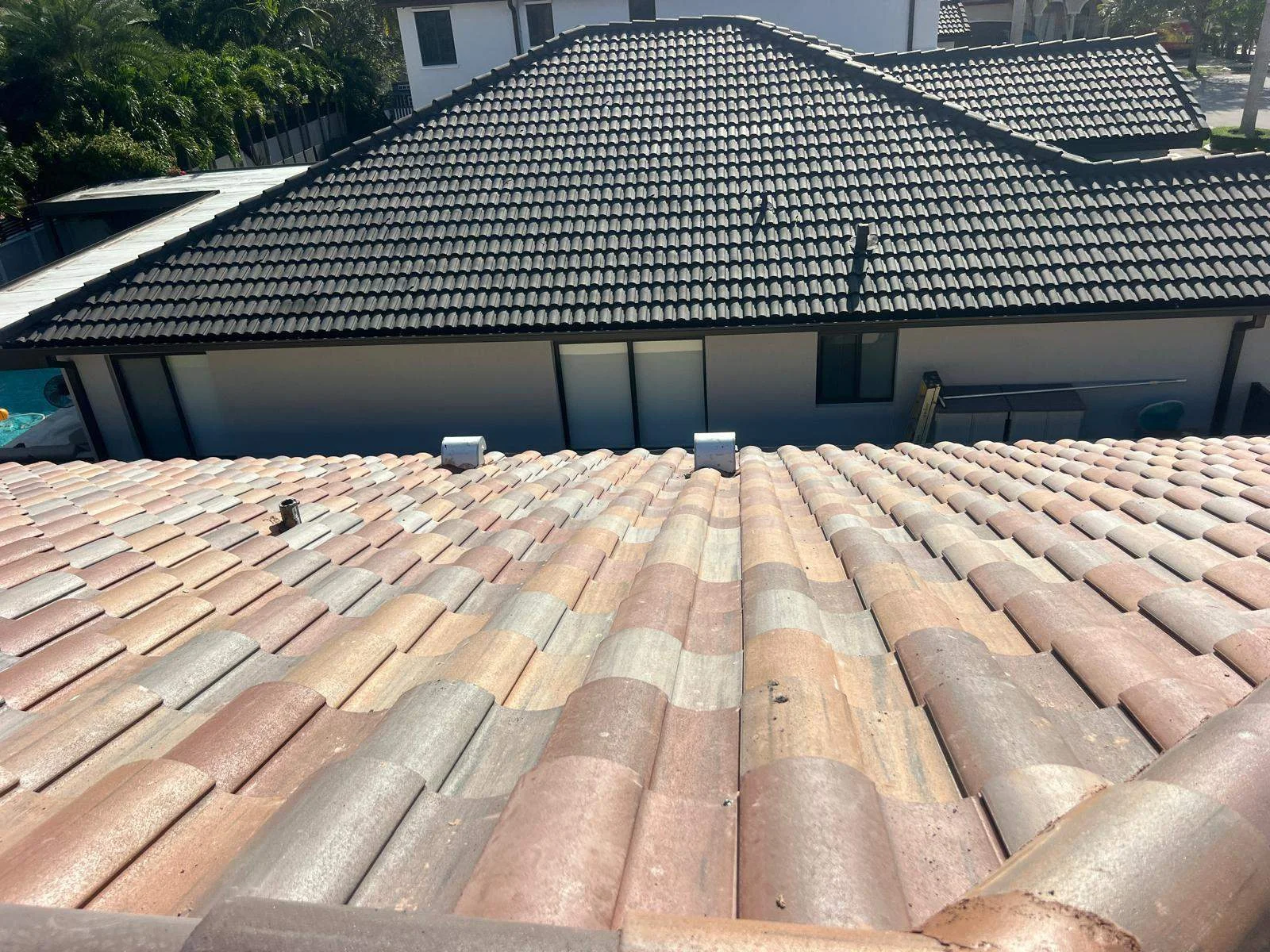
A cracked tile after a summer storm can look like a small fix. Sometimes it is. Sometimes it's the first visible sign of an underlayment that's quietly worn out under the whole roof. This guide to tile roof repair vs replacement in Boca Raton walks you through what to check, what actually ages a tile roof here, and how to decide which path makes sense for your house. No guesswork, just a clear framework.
The short version: the tile usually isn't the problem
Here's the part that surprises most homeowners. Concrete and clay tiles are tough. They often outlast the materials underneath them by decades.
The real lifespan of a tile roof in South Florida usually comes down to the underlayment, the waterproof layer sealed to the roof deck beneath the tile. When that layer fails, water reaches the wood, and no amount of tile replacement will stop the leak.
What the tile does and doesn't do
Tile sheds most of the rain and shields the underlayment from sun and wind. It is not the watertight seal. Water routinely gets under tile during heavy, wind-driven rain, and the underlayment is what keeps it out of your attic.
That's why a roof can look perfect from the street and still leak.
Why this changes the repair question
If the underlayment is healthy, swapping broken tiles or resealing a flashing detail is a reasonable, durable fix. If the underlayment is brittle, torn, or near the end of its service life, a repair just moves the leak a few feet over. The decision almost always hinges on what's under the tile, not the tile itself.
The question to ask first
Before you ask "repair or replace?", ask "how old is my underlayment, and what condition is it in?" A permit history, the original closing documents, or a professional inspection can help answer that. Start there.
Tile roof life expectancy in South Florida
Boca Raton roofs live a harder life than roofs in milder climates. Intense UV, daily heat cycling, salt air near the coast, and hurricane-season wind all wear on roofing materials. Lifespans below are commonly cited ranges, not promises. Installation quality, ventilation, and maintenance all move the numbers.
| Roof component | Commonly cited lifespan in South Florida | What usually ends its life |
|---|---|---|
| Concrete roof tile | 40 to 50+ years | Cracking from impact or foot traffic, surface erosion |
| Clay roof tile | 50+ years | Breakage from impact, debris, or improper walking |
| Underlayment (beneath tile) | Roughly 15 to 30 years, depending on type and installation | Heat, UV exposure at gaps, age-related brittleness |
| Flashing and sealants | Varies widely; sealants often need attention well before the roof does | Sun exposure, thermal movement, corrosion near salt air |
Concrete vs clay in our climate
Most Boca Raton tile roofs are concrete tile, with clay on some older and higher-end homes. Both handle heat well. Concrete is heavier and more porous, so it can collect mildew and lose surface color over time. Clay holds color longer but can be more brittle under impact. Neither choice changes the underlayment math much.
Coastal homes age faster in specific spots
If you live east of Federal Highway or near the Intracoastal, salt exposure matters. Metal flashing, fasteners, and valley materials can corrode faster than they would inland. Inspections on coastal homes should look closely at these details, because they're often where leaks start.
Why the age on paper isn't the whole story
Two roofs installed the same year can be in very different shape. One may have had good ventilation, a clean installation, and periodic maintenance. The other may have taken storm damage that went unnoticed. Age gives you a starting point. Condition gives you the answer.
When repair is the smarter move
Plenty of tile roofs in Boca Raton need a targeted fix, not a full tear-off. A repair makes sense when the damage is localized and the system underneath still has real life left.
Signs a repair should be enough
- A handful of cracked or slipped tiles after a storm, with no interior leak
- A leak traced to one specific spot, like a pipe boot, chimney, or wall flashing
- Mortar deterioration at ridges or hips on an otherwise sound roof
- An underlayment that's well within its expected service life and still pliable when inspected
- Damaged or clogged valleys that are directing water where it shouldn't go
What a good tile repair involves
Tile repair is careful work. A roofer removes tiles around the problem area without breaking their neighbors, inspects and repairs the underlayment or flashing beneath, then resets matching tile with the correct attachment method. Matching matters. Older tile profiles and colors can be hard to source, so it helps when a roofer keeps that in mind from the start.
If that sounds like your situation, our team handles tile roof repair in Boca Raton">tile roof repair in Boca Raton for exactly these localized problems.
The limit of repairs
Repairs stop being smart when they start stacking up. If you're calling a roofer after every heavy rain, and each visit finds a new leak in a new area, the roof is telling you something. That pattern usually points to a system-wide underlayment problem.
Signs it's time for a full replacement
Replacement is a big decision, so it should be driven by evidence. These are the conditions that typically push the answer toward a new roof.
Underlayment at or past the end of its life
If an inspection shows the underlayment is brittle, cracking, or crumbling when tiles are lifted, the waterproofing layer is failing everywhere, not just in one spot. With tile roofs, this is the single most common reason for replacement. The good news is that sound tiles can sometimes be reused, depending on their condition and current requirements.
Widespread leaks or deck damage
Multiple active leaks, soft spots when the roof is walked, or rotted decking visible from the attic all suggest water has been getting in for a while. At that point the deck itself may need sections replaced. That work happens during a re-roof, not a patch job.
Major storm damage across large areas
After a hurricane or severe wind event, a roof can lose tiles across whole slopes, with underlayment exposed or torn. Large-area damage often makes repair impractical. Florida also has rules about how much of a roof can be repaired versus replaced to current code, and those rules have changed in recent years. Requirements vary by roof age and situation, so check with your local building department or a licensed roofer before assuming either way.
Repair vs replacement, side by side
Sometimes it helps to see the decision laid out plainly. Use this as a gut check, then confirm it with an inspection.
- Damage location. Repair: one area or one detail. Replacement: multiple slopes or the whole roof.
- Underlayment condition. Repair: pliable, intact, mid-life. Replacement: brittle, torn, or at end of life.
- Leak history. Repair: first leak, clear source. Replacement: recurring leaks in changing spots.
- Deck condition. Repair: solid. Replacement: soft, stained, or rotted in several areas.
- Long-term plans. Repair: buys time on a roof that still has years left. Replacement: resets the clock for the next couple of decades.
- Insurance and code factors. Repair: often straightforward. Replacement: may be triggered by roof age, extent of damage, or carrier requirements.
Where homeowners get stuck
The hardest cases sit in the middle. Picture a roof around 18 to 20 years old with one leak and decent-looking tile. Repairing it may be perfectly reasonable. It may also be the first of several. In these cases, the inspection findings, especially photos of the underlayment, should drive the call.
Don't let a single quote decide it
A clear recommendation should come with reasons you can see. Ask for photos of the problem areas and the underlayment. Ask why repair won't hold, or why replacement isn't needed yet. A good roofer will explain either answer without pressure.
Roof replacement cost factors in Boca Raton
Price isn't one number. It's a stack of variables, and understanding them helps you compare quotes fairly.
What drives the cost of a tile re-roof
- Roof size and pitch. More square footage and steeper slopes mean more material and labor.
- Complexity. Hips, valleys, dormers, and multiple roof planes add time and detail work.
- Tile choice. Concrete and clay differ in material cost and handling, and some profiles are harder to source.
- Tile reuse vs new tile. Reusing sound tile can reduce material needs, but only if the tile qualifies and handling losses are manageable.
- Underlayment system. Different underlayment types and attachment methods vary in cost and expected life.
- Deck repairs. Rotted or damaged sheathing found during tear-off adds to the scope.
- Permits and code upgrades. Current wind-resistance requirements can affect attachment methods and materials. Check local requirements with your roofer.
What affects repair cost
Repair pricing depends on access, how many tiles must be lifted, whether matching tile is available, and what's found underneath. A simple tile swap is very different from a flashing rebuild at a wall. Ask your roofer to separate what's confirmed from what might come up once tiles are removed.
How to compare quotes fairly
Line the quotes up by scope, not just the bottom line. Check that each one names the underlayment type, the tile attachment method, how deck repairs are handled, and who pulls the permit. A lower number that leaves out deck work or permitting isn't really lower. It's just incomplete.
Why an inspection settles the debate
You can't judge an underlayment from the driveway. You can't judge it from a drone photo, either.
A proper tile roof inspection means walking the roof carefully, lifting tiles in representative areas, checking flashing and valleys, and looking at the attic for staining or daylight. That's how a roofer gets an honest read on remaining life.
What a roof inspection in Boca Raton should cover
- Cracked, slipped, or missing tiles across all slopes
- Underlayment condition at several lifted-tile sample points
- Flashing at walls, chimneys, skylights, and roof penetrations
- Ridge and hip mortar or attachment
- Valleys and drainage paths, including gutters
- Attic signs of moisture, staining, or deck damage
When to schedule one
Good times include after any major storm, before buying or selling a home, when your roof is approaching the underlayment's typical service range, or any time you spot a ceiling stain. An inspection before hurricane season can also help you catch loose tile before wind finds it.
If water is actively coming in, don't wait for a routine visit. PSR Roofing Company of Boca Raton offers 24/7 emergency roofing help">24/7 emergency roofing help to stabilize leaks while you figure out the long-term plan.
What you should get afterward
You should walk away with photos, a plain-language summary, and a recommendation with reasons. If it's repair, you'll know what's being fixed and why the rest of the roof is sound. If it's replacement, you'll understand which findings point that way. That's how PSR Roofing approaches inspections for Boca Raton homeowners.
Frequently asked questions
How long does a tile roof last in Boca Raton?
The tiles themselves often last 40 to 50 years or more. The underlayment beneath them usually sets the real timeline, commonly in the range of 15 to 30 years depending on materials and installation.
Can I just replace broken tiles?
Yes, if the underlayment beneath them is healthy. A roofer should check what's under the broken tiles before resetting new ones.
Can my existing tiles be reused on a new roof?
Sometimes. It depends on tile condition, availability of replacements for breakage, and current requirements. An inspection will show whether reuse is practical.
Does a small leak mean I need a new roof?
Not necessarily. Many leaks come from flashing or a single damaged area. Recurring leaks in different spots are a stronger sign of system-wide wear.
How often should I have my tile roof inspected?
Many homeowners schedule an inspection once a year and after major storms. Older roofs benefit from closer attention.
Will insurance affect my repair or replacement decision?
It can. Carriers may weigh roof age and condition. Talk with your insurer and your roofer about your specific policy.